

When people talk about the AI boom, they usually focus on models.
A smarter model. A cheaper model. A video model. A coding model. A model that can somehow do everything except explain your GPU bill.
But the real story in 2026 is not just happening inside the models. It is happening behind them.
That story is money.
More specifically, it is about how banks, private credit firms, and major investors are starting to finance the physical and commercial backbone of AI: data centers, chips, servers, power systems, and long-term compute contracts.
That is why AI infrastructure financing is becoming one of the most important business stories of the year.
This is no longer just a technology discussion. It is a capital markets discussion.
And once you start looking at recent deals, it becomes obvious that the AI industry is not only building better models. It is also building a new financing system around the hardware, facilities, and usage that make those models possible.
Why AI Infrastructure Financing Matters Now
A few years ago, AI still felt experimental in financial terms.
Yes, companies were buying GPUs. Yes, cloud providers were expanding. But a lot of that spending still looked like traditional tech capex: expensive, fast-moving, and hard to finance conservatively.
In 2026, the scale is different.
AI now requires vast amounts of infrastructure, and that infrastructure is expensive enough that normal corporate spending is not always enough. As a result, the market is moving toward more structured and specialized financing.
That is where AI data center financing enters the picture.
Banks and investors are no longer just asking whether AI is exciting. They are asking whether the assets behind AI can support debt, generate stable returns, and behave like financeable infrastructure.
That is a major shift.
It means AI is increasingly being treated not just as software innovation, but as an asset-heavy industrial system.
NVIDIA Is Pushing the Idea Even Further
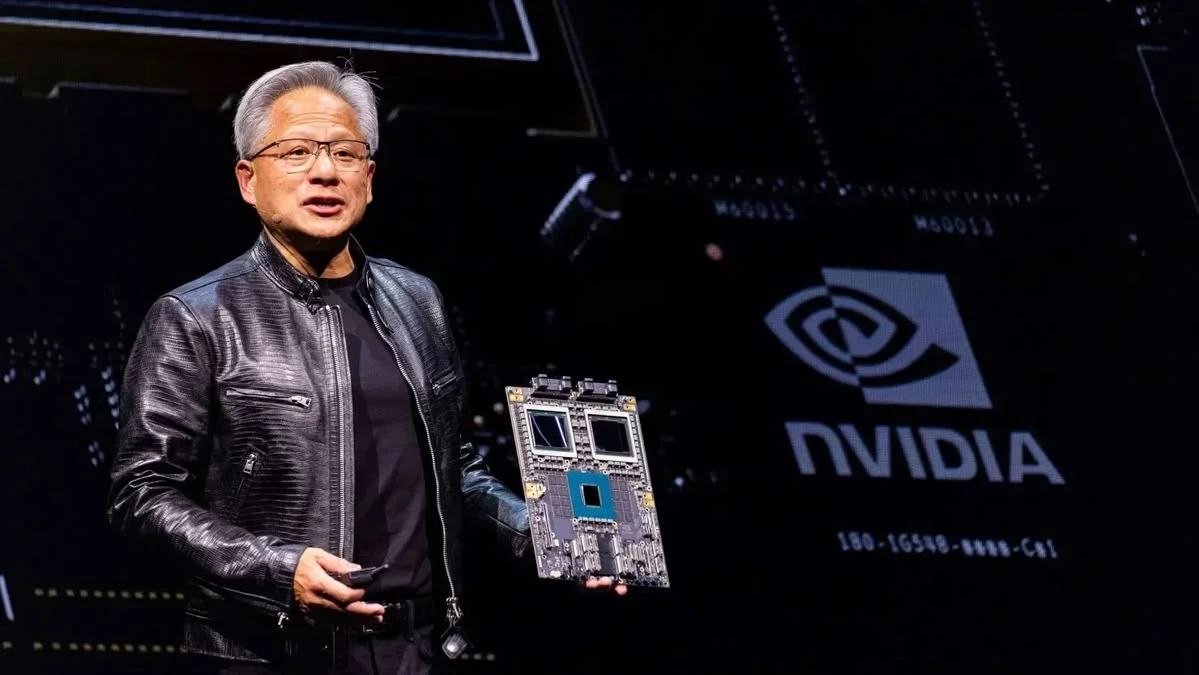
If lenders are learning to finance AI hardware and infrastructure, NVIDIA is pushing the conversation to an even bigger level.
In August, NVIDIA announced partnerships with Apollo, BlackRock, Blackstone, Brookfield, Goldman Sachs, and KKR to establish AI compute infrastructure financing platforms. The stated long-term ambition is to mobilize more than $500 billion of third-party capital.
NVIDIA’s framing is especially important: it is treating AI compute as an investable asset class.
That phrase matters.
It means AI compute is no longer just something companies buy in order to run models. It is becoming a capital category of its own.
And the real financial logic is not simply the hardware.
It is the usage.
The reason a large AI factory or cloud cluster becomes interesting to financiers is not because it contains a beautiful row of expensive chips. It is because those chips may generate long-duration, usage-linked revenue.
That is the deeper transition underway in AI infrastructure financing.
Finance is learning to look at AI systems not only as technical assets, but as income-producing systems.
$22 Billion: AI Chips Are Starting to Look Like Bankable Assets
One of the clearest recent examples is the reported financing around Crux AI, the AI cloud venture backed by Blackstone and Alphabet.
According to Reuters, a group of banks including Goldman Sachs, SMBC, Barclays, BNP Paribas, and Bank of Nova Scotia is providing around $22 billion in loans. The financing is tied to the buildout of AI cloud infrastructure, with Google supplying TPUs, software, and services.
What makes this especially important is not just the size of the deal.
It is the structure.
The financing is reportedly supported by the value of the TPUs and customer contracts.
That sounds simple, but it represents a real change in how lenders think.
Instead of looking only at a company’s general balance sheet, they are looking at specific AI infrastructure assets and asking:
What are these chips worth?
Who is already committed to using them?
What kind of revenue can they help produce?
That is a very different conversation from the old view of AI hardware as something too fast-moving or too specialized to support large-scale debt.
It suggests that AI chips are starting to look less like short-lived equipment purchases and more like financeable productive assets.
AI Data Center Financing Is Expanding Fast
The $22 billion chip-related financing deal may be dramatic, but it is not happening in isolation.
The broader market for AI data center financing is growing rapidly.
J.P. Morgan has described AI infrastructure financing as one of the most important capital deployment themes of 2026. That makes sense. Training clusters, inference capacity, and data center expansion now require so much spending that they are attracting the attention of the same financial ecosystem that once focused mainly on real estate, utilities, and telecom networks.
And in many ways, AI data centers are starting to resemble those industries.
They require heavy upfront capital.
They depend on long-term demand.
They need access to power and land.
And their economics increasingly depend on signed contracts and predictable usage.
That is why financing an AI data center is no longer just about funding a building full of servers. It is about evaluating a full system: hardware, energy, tenancy, customer commitments, and long-duration cash flow.
In other words, lenders are not simply financing a warehouse. They are financing future compute demand.
GPUs Are Becoming Financeable Infrastructure
The same pattern is showing up in GPU-backed lending.
Lambda recently closed a $926 million senior secured term loan tied to GPU infrastructure and related assets serving investment-grade customers. That kind of structure matters because it shows that GPUs are no longer being viewed only as rapidly depreciating hardware purchases. In the right setting, they can also be treated as part of an asset-backed financing framework.
Another example came from General Compute, which reportedly secured $400 million in debt financing backed in part by inference-specific chips.
That is remarkable not just because of the amount, but because it signals a growing willingness among lenders to underwrite AI hardware more directly.
A few years ago, the concern might have been:
Will these chips become obsolete too quickly?
Now the more relevant question often seems to be:
Which chips, contracts, and workloads create the most financeable structure?
That is a sign of a maturing market.
China Is Testing a Different but Related Idea
For an overseas audience, the U.S. and global financing cases are still the main story.
But there is one development in China that is too interesting to ignore.
Some Chinese banks are beginning to experiment with credit products that incorporate AI token consumption into credit assessment.
This does not mean tokens themselves are collateral.
That would be a misleading way to understand it.
The more accurate idea is that token usage can act as a signal of real business activity. If an AI company’s token consumption is rising steadily, that may suggest more users, more orders, more usage, or stronger product-market fit. In practice, token data is considered alongside more traditional information such as compute contracts, orders, receivables, revenue, and intellectual property.
This is still a different approach from U.S.-style chip-backed or contract-backed financing.
But it points in the same direction.
Banks are searching for new ways to understand what makes an AI business financially credible.
Sometimes that means valuing GPUs and TPUs.
Sometimes that means studying signed compute contracts.
And sometimes, it may mean looking at actual usage data.

What This Means for the AI Economy
Put all of these cases together, and a larger pattern emerges.
The AI economy is creating a new kind of financeable stack.
That stack increasingly includes:
data centers
GPUs and TPUs
long-term customer contracts
compute revenue
AI infrastructure debt structures
usage signals that help validate real demand
This does not mean every AI asset is safe, stable, or easy to value.
Far from it.
There are still major risks: technology obsolescence, overbuilding, energy bottlenecks, customer concentration, and uncertain long-term demand.
But the important shift is that financial markets are no longer treating AI infrastructure as something too new or too strange to underwrite.
They are building frameworks around it.
That may turn out to be one of the most consequential parts of the entire AI boom.
Because in the long run, the companies that shape AI will not depend only on who has the best model.
They will also depend on who can build, finance, and scale the infrastructure underneath it.
The Bigger Shift Behind the Headlines
The headline deals are big, but the deeper change is even bigger.
Industrial-era finance learned how to price factories, machines, and logistics networks.
Internet-era finance learned how to value traffic, software, and subscription revenue.
Now AI-era finance is learning how to value something new:
chips, compute, contracts, and usage.
That is why this story matters beyond one $22 billion loan, one GPU-backed facility, or one bank product in one market.
A new layer of financial logic is forming around AI.
And if 2026 is the year AI infrastructure became impossible to ignore, it may also be the year AI infrastructure financing became impossible to ignore too.
Reference Link: